
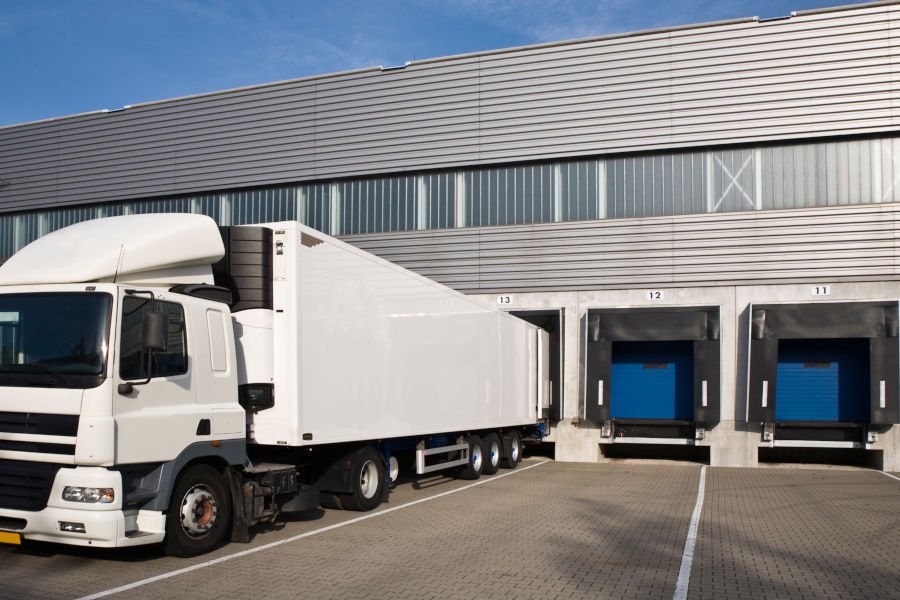
FreightWaves put the new commercial lanes at the Anzalduas crossing at roughly 1,200 to 2,000 trucks a day once the expansion is complete. Whatever number turns out to be right, the direction is plain: more heavy trucks on the roads around McAllen, and more buildings that need a place for them to turn, park and dock. A truck court is where a warehouse either works or does not, and it is the paving most likely to fail early if it is designed or built carelessly.
We build truck courts, dock aprons, trailer parking, drive lanes and the concrete pads under container and chassis storage. The loads are severe. Landing gear on a parked trailer concentrates tens of thousands of pounds on a few square inches, braking and turning trucks shear the surface, and dock aprons see the same wheel path hundreds of times a week. Heavy-duty pavement is a different product from a parking lot, and we price and build it that way.
The Texas Comptroller reports that the Port of Hidalgo, one of 11 Texas land ports and five ports of entry in the Rio Grande Valley, handled $46.4 billion in trade in 2024. The port's facilities include the Anzalduas International Bridge, the McAllen-Hidalgo International Bridge and the Pharr International Bridge. Freight crossing at those bridges ends up in warehouses, cross-docks and distribution centers nearby, and many of those buildings are being built or planned around McAllen, Mission and Hidalgo.
FreightWaves also reported that the city processed 42,749 empty southbound trucks in 2023 and that Mission's economic development director said about $650 million in construction permits had been issued over four years, much of it tied to cross-border trade. For an owner, the lesson is that truck volume is already here and growing. A court designed for yesterday's traffic will be tested sooner than the pro forma assumes. That is especially true around the Anzalduas bridge area.
Where will trailers park, and where will they turn? A dock layout that works on paper can fail when a 53 foot trailer cannot swing into a stall without leaving the pavement. We check turning paths with the civil engineer, then look at queuing: how many trucks arrive at once, where they wait and whether they will back up onto a public street.
Next is pavement type. Concrete is the usual choice for dock aprons and areas where trailers sit under load, while asphalt can work for drive lanes and light-duty parking at a lower first cost. The mix of the two is a standard strategy, with a concrete apron at the docks and flexible pavement elsewhere. Subgrade support, drainage and joint design matter as much as thickness. Our drainage work and parking lot construction are planned together with the court so slopes carry water away from the docks.
Truck courts touch more regulators than the building does. The driveway approach may need city or TxDOT approval, the site plan has to show turning radii and fire access, and stormwater rules apply to the large impervious area. McAllen recently updated its Unified Development Code to streamline permitting, and we use those changes where they apply, but each city sets its own rules and we confirm with the building department before design is final.
Accessibility requirements also reach the paving. Texas Accessibility Standards apply to projects registered, permitted or constructed after March 15, 2012, and projects costing $50,000 or more must be registered with the Texas Department of Licensing and Regulation, so route slopes from accessible parking to the building entrance are checked as part of the pavement layout, not as an afterthought.
It starts below the surface. We confirm the subgrade modulus, stabilize or replace weak material, and compact a base to the specified density. Concrete panels are placed with dowels at joints for load transfer, with joint spacing set by the engineer, and we saw cut early enough to control cracking. On the apron, we use a mix designed for abrasion and a finish that provides traction without being so rough that it chews tires.
Dock approach slabs often tie into the building slab and tilt panels, which means floor and apron work is planned together. We check dock door elevations against the leveler specifications so that trailers sit at the right height. A final survey records slopes and elevations so any ponding can be corrected before you move in.
Most court work comes from logistics and distribution operators, speculative developers and manufacturers who ship out of the Valley. Manufacturers ask for service yards, fleet lots and equipment pads that need pavement built to handle repeated heavy turns. Developers working on spec buildings in the Anzalduas corridor often ask us for a court layout that works for several likely tenants rather than one user.
The planned south-side cargo apron in the airport's 20-year master plan is a reminder that heavy pavement is not only for trucks. Aircraft aprons are a specialty beyond our usual scope, but the principles of subgrade, joints and drainage are the same.
Thickness, area and subgrade condition account for most of the cost. A larger court, a tighter turning radius or a requirement for concrete throughout will raise the price quickly. Stabilizing soft subgrade with lime or cement, importing select fill and installing underdrain systems are common add-ons.
We recommend owners compare life-cycle cost, not first cost. A cheaper asphalt court that needs resurfacing sooner can cost more over a lease term than a concrete apron that lasts. We present both options with ranges so you can choose according to your hold period.
Send the site plan and the truck types you expect. We will check turning paths, recommend a pavement mix and return a price range with the items that decide it.
Concrete is the standard where trailers park under load or where trucks turn tightly, because it resists rutting and landing gear punching. Asphalt can work in drive lanes. A mix of the two is common and keeps first cost down.
The engineer sets thickness based on the truck loading, the subgrade and the design life. Heavy dock aprons are usually thicker than parking-lot paving. We price the thickness shown on the drawings and offer alternatives if we see an opportunity.
Yes, and we usually do, but sequencing matters. Paving too early can leave it damaged by tilt panel cranes and heavy deliveries. We phase the apron after the heavy lifts are done and keep haul routes on the base until then.
Joint layout, dowels, early saw cutting and good curing. Some hairline cracking is normal in concrete paving, and joints are there to direct it. We give owners a clear picture of what is normal and what is a defect.