
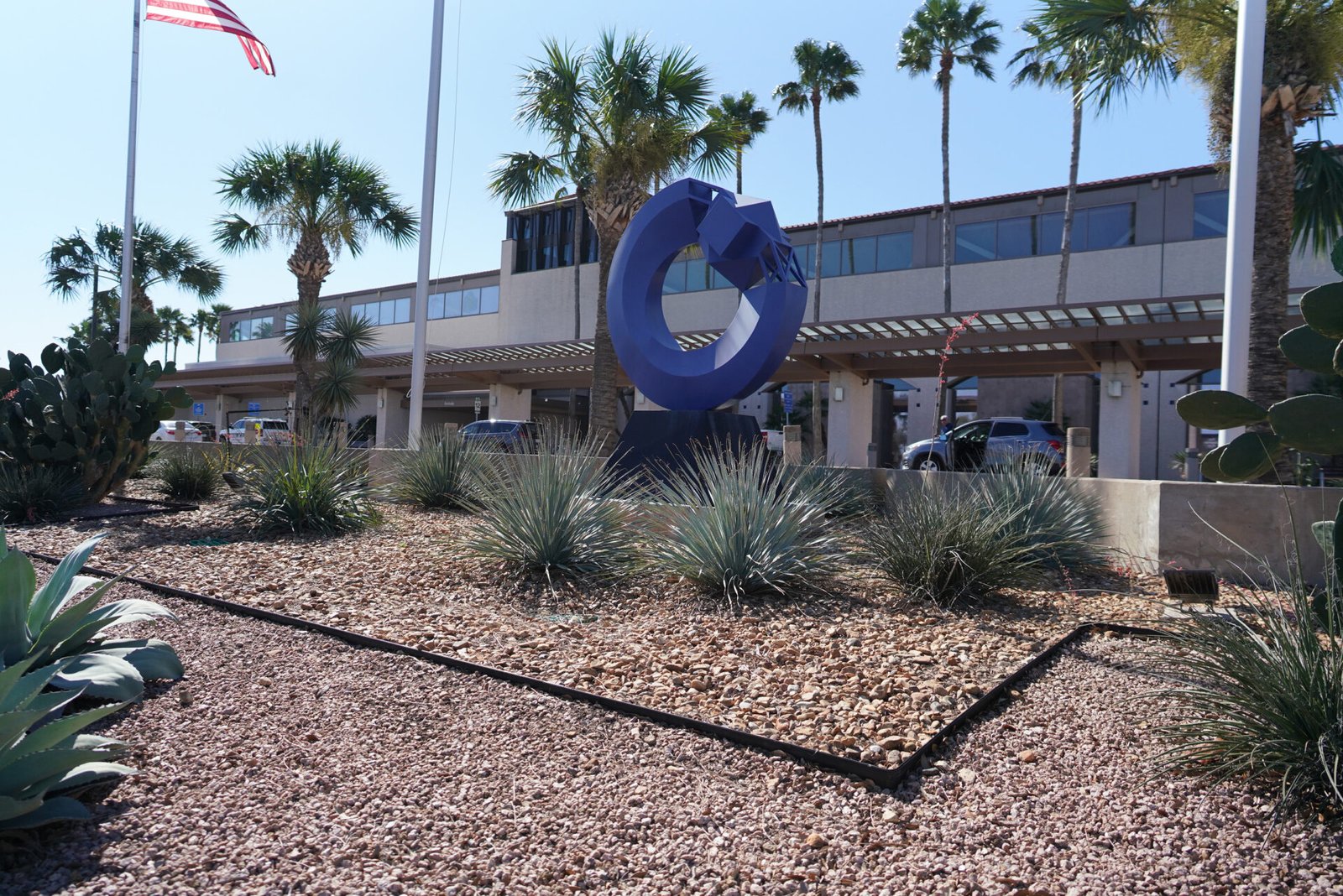
Airside and landside work follow different rules, and an owner building near McAllen Miller International Airport needs a contractor who respects both. We build the landside buildings that surround an airport: hotels, parking, rental-car and service facilities, air-cargo warehouses and hangars. Our project teams also know how to keep a construction site from becoming a hazard to flight operations, which means controlled crane heights, dust and debris discipline, and haul routes that stay clear of aircraft movement areas.
The airport is plainly a growth story. Wikipedia reports 2025 passenger volume of 1,142,842, with 576,034 total enplanements, and a city-contracted study reported by KRGV in August 2024 found the terminal "getting tight" on space. The same report said McAllen was considering a $160 million expansion adding terminal space and parking, with work possibly starting in 2027. A public airport project is the airport authority's decision, not ours, but neighbors respond to that kind of signal: hotel operators, parking operators and cargo users start planning for the traffic before the terminal opens its new gates.
That is the work we price for owners around the field, and we try to give them a clear read early: what can be built under a flight-path height limit, how the site drains, and how long approvals will take. Below are the details that matter most.
Hotels and extended-stay buildings are the clearest fit. A travel-driven hotel needs quick room turns, a lobby that handles early-morning airline crews and a shuttle canopy, and a hospitality hotel schedule built around franchise brand standards and furniture delivery. Parking comes next. When terminal parking runs short, private lots and decks appear nearby, and a parking structure gets cost-effective once land is scarce enough that going vertical beats paving more acres.
Cargo and light industrial buildings round out the list. Wikipedia states that a Foreign Trade Zone designation site is located at the airport to help with air cargo needs, and the airport's 20-year master plan, as described there, includes an expanded south-side cargo apron. An owner who wants a cross-dock or a climate-controlled bonded warehouse near that apron should talk to us about slab design, dock layout and truck court pavement early, because those drive both cost and function.
An airport sets limits that ordinary commercial sites never see. Crane heights and temporary equipment can penetrate protected airspace, so the lift plan has to be cleared before the crane arrives. Light poles on a construction trailer, tall scaffolds and even tall stockpiles can matter. We ask the owner's design team for the height limits at the start, put them on the site logistics plan and brief every superintendent before mobilization.
Foreign object debris is the other discipline. Loose gravel, plastic sheeting and fasteners can blow toward a runway, and an airport operator will not tolerate that. We sweep haul roads, tie down materials, cover loads and keep the site tidy as a standard practice, not a reaction to a complaint. Worker safety follows the same logic: badge control, escort rules where required and a site gate that does not queue traffic onto an airport access road.
Aviation tenants want large clear-span interiors, doors tall enough for the tail of the aircraft they fly and floor slabs that carry heavy loads. Our aircraft hangar work starts with the door: a bi-fold or hydraulic door sets structural header design, and the tail height of the largest aircraft usually decides the clear height. Fire suppression for hangars is a separate engineered system and needs a fire marshal conversation before pricing is final.
For businesses supporting the airport rather than operating aircraft, a flex building with a showroom, offices and roll-up doors fits well. Catering kitchens, ground-support equipment shops, freight forwarders and parts distributors all use some version of that layout. We build them as steel-frame or tilt-wall shells depending on span and budget, and we work with owners on which tenant improvements can wait until a lease is signed.
The calendar on an airport-adjacent site is shaped by approvals as much as by construction. A project that touches airport property or rides on its utilities needs review from the airport operator, the city and sometimes federal aviation authorities, and each of those has its own review time. We list every approval on the first schedule and show which ones sit on the critical path so owners can decide what to start early.
Phasing matters when you build beside an operating terminal. Our phased construction on occupied sites experience covers staging areas, temporary access, utility shutdowns scheduled for off-peak hours and security gates that keep the public out of the work zone. Long-lead items such as switchgear, elevators and large HVAC units often decide the finish date, so long-lead procurement usually gets ordered while permits are still under review.
Three items move an airport-area budget more than any others. The first is pavement: aircraft-adjacent and truck-heavy areas use thicker sections than a typical parking lot, and the commercial concrete floor and paving crews we coordinate price those sections from the intended loads, not from a generic detail. The second is utility service. A site that needs a new water or sewer extension carries that cost, and the extension schedule can decide whether the building opens on time.
The third is the unknown of timing on the public side. The 2015 terminal expansion described by the City of McAllen added 55,000 square feet to an existing 100,000 square feet at a cost of $26 million, which shows how long the airport has planned for growth. Private owners should not assume the next public expansion will arrive on any specific date, because the 2024 report described funding still being worked out. We advise owners to build at the pace of their own tenant demand and keep the site flexible for the next phase.
Owners at the airport usually compare it against two other sites. The medical and hospital corridor to the northwest is covered on our McAllen medical district page, and the larger industrial campuses on the south side appear on the Ware Road industrial page. Each has different utilities, different tenants and a different permit path, and we are glad to compare them side by side.
For logistics users who care about cargo and truck access, the bridge-side industrial work in logistics and distribution is also worth a look. The airport is one gate among several, and some tenants will split operations between air cargo, rail and the border crossings depending on what they ship.
Tell us the parcel, the use and any height or access constraints you know about. We will build a schedule that shows approvals, procurement and construction together, and a budget range with the items that could move it.
Often yes, but only after the lift is cleared against protected airspace. We get the height limits from the design team at the start, show them on the site logistics plan and coordinate the approval before mobilizing. Tower cranes are rare on low-rise jobs, so mobile cranes with defined swing and height limits are the usual answer.
Yes. The clear height is set by aircraft tail height, the door is a structural element of its own, and fire suppression is a specialized system. The slab also has to carry aircraft, tugs and fuel equipment. We price the door and suppression early because they usually decide the budget.
Reported plans include a possible $160 million terminal and parking expansion starting as early as 2027, and a master plan with a longer runway and larger cargo apron, but these are plans, not commitments. We treat them as context for demand, not as schedule facts, and keep private sites flexible.
They benefit from it. Heavy forklift traffic and truck turning movements need flat, durable slabs and thicker pavement at the apron. We design the concrete sections around the equipment and trailer load the owner expects, not a default number.
Possible airport-operator review of height and drainage, utility provider reviews and, for projects costing $50,000 or more, state accessibility registration through the Texas Department of Licensing and Regulation. We list each review on the schedule before design is finished.