
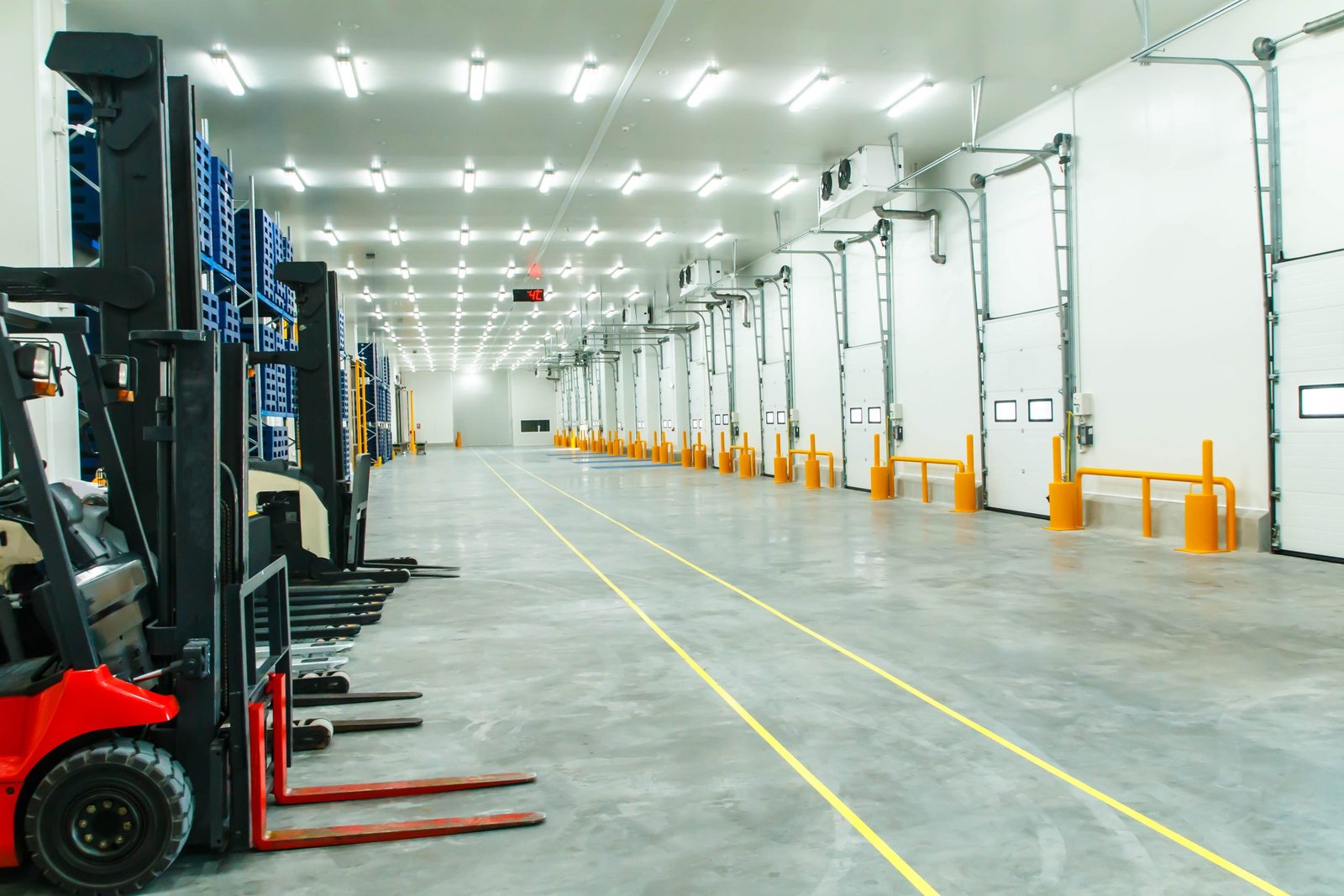
Condensation is the quiet enemy of every cold storage building, and in a warm, humid place like the lower Rio Grande Valley it is a daily test. A freezer wall that fails to seal at the base, a dock door that stays open too long, a roof penetration with a poor flashing: any of them turns into ice, dripping or rot. We build cold storage with the vapor barrier drawn first and everything else arranged around it.
The demand for refrigerated space follows the produce and freight that move through the border region. In Hidalgo, a December 2018 report described a 112 acre redevelopment that would include more than 100,000 square feet of cold storage, 140 apartment units and commercial areas along 10th Street, with about 200 immediate jobs according to the city manager. Mission's Sharyland Business Park, for its part, lists cold storage among its target uses. Those two examples show the building type is not hypothetical here.
What follows explains how we approach the structure, the refrigeration pad, the floor and the drainage, along with a realistic view of cost. For ambient inventory without temperature control, a conventional warehouse costs much less per square foot.
Perishables cannot wait at a crossing. A grower or importer who needs the product chilled within hours needs space close to the bridges and the interstate. The Sharyland Business Park offers Interstate 2 access through Anzalduas Highway, is about eight miles from the airport and sits minutes from the Anzalduas International Bridge, and it targets logistics, manufacturing, cold storage and distribution. A tenant weighing sites will compare how fast a refrigerated truck can unload and clear the yard.
The Hidalgo redevelopment shows a mixed approach, combining cold storage with housing and street-front commercial space. For a developer, that kind of mixed program raises permitting and noise questions we sort out through the Hidalgo planning staff early. The goal is to keep trucks, compressors and neighbors from colliding. Compressor noise, truck idling and night loading are the three complaints that most often reach a city council, so we place equipment away from property lines and shield it where we can.
A cold storage envelope is built from insulated metal panels with continuous vapor sealing at every joint, corner and penetration. The panel thickness depends on temperature: a cooler needs less than a freezer. The roof usually carries rooftop condensers and evaporator supports, so structural framing must handle added weight and vibration.
A freezer floor is the single most specialized element. Under a freezer slab sits insulation and a heating system, either glycol or electric, that stops the ground from freezing and heaving. Skipping or underbuilding it causes frost heave that can crack a floor within a few years. We coordinate those layers with the refrigeration contractor and the commercial concrete floor crews we coordinate so each layer is inspected before the next goes down.
Hurricane Hanna dropped 12.66 inches of rain at a gage 2.4 miles northeast of McAllen in July 2020, and the general manager of Hidalgo County Drainage District No. 1 told KRGV that the county system was originally agricultural and not built for that kind of event. Water that normally moves through in about 48 hours took several days. A cold storage building with docks near grade needs a plan for that reality, because water at the dock apron can reach the floor and compromise door seals.
We raise the finished floor with margin above the surrounding grade, set the dock apron to drain away from the building and design retention to the district's requirements. Our stormwater drainage work covers the details. In unincorporated areas the county floodplain order may also require a development permit, with its own review.
The premium over ambient space comes from four places: insulated panels, the refrigeration plant, the heated freezer floor and the electrical service. Redundant power for the compressors, plus a generator for the product, can add a meaningful share. Operating cost matters as much as construction cost, so we show owners how insulation thickness and door choices change energy use.
Equipment is a major lead-time item, which makes long-lead procurement an early job, not a late one. A condensing unit or ammonia system ordered late can hold the building hostage for months.
A cold storage building is not ready when the walls are up. The refrigeration system has to be charged, balanced and run until the rooms hold temperature, and a freezer is brought down in stages so the floor and panels are not shocked. That pull-down can take days or weeks depending on size, and the operator cannot load product until it finishes. We place pull-down and testing on the schedule as real activities with real durations, next to the final inspection, instead of treating them as a footnote.
Commissioning also covers door alarms, temperature logging, defrost cycles and emergency power transfer. We bring the refrigeration contractor, the electrician and the owner's operations lead together for a walk-through before the first pallet arrives, and we keep the punch list short by inspecting panels and seals as they are installed.
Operators range from produce handlers and food processors to retailers needing regional chilled distribution. Developers who build for them should understand the tenant mix. A speculative cold storage building appeals to a wider pool when it offers more than one temperature zone and a flexible dock layout. We often discuss this with commercial real estate developers who are weighing a refrigerated shell against a dry one.
Food and beverage plants have additional needs such as washdown and wastewater, covered in our food and beverage processing page.
Tell us the product, the temperature ranges and the pallet count you need. We will give you a layout, a price range and a plain list of what can change it, in time for lenders, partners and operators to make a decision.
Sometimes, but it is expensive. Existing slabs lack under-floor heating, wall panels may not carry vapor barriers and the roof may not support condensers. If there is a real chance you will want cold space, ask us to design a convertible shell with a stronger roof and a floor that can accept insulation.
Because the floor system and door seals are sensitive to water, and product spoils quickly if power fails. We raise floors, protect electrical gear and locate generators above expected water levels.
Refrigeration packages can take months to deliver, longer than the shell takes to build. We order as early as the design allows and plan the schedule so that the equipment arrives when the building is ready for installation.
It depends on availability and the tenant's timeline. Building gives you control over layout and temperature zones. We can price a build-to-suit option against a lease so you can compare.