
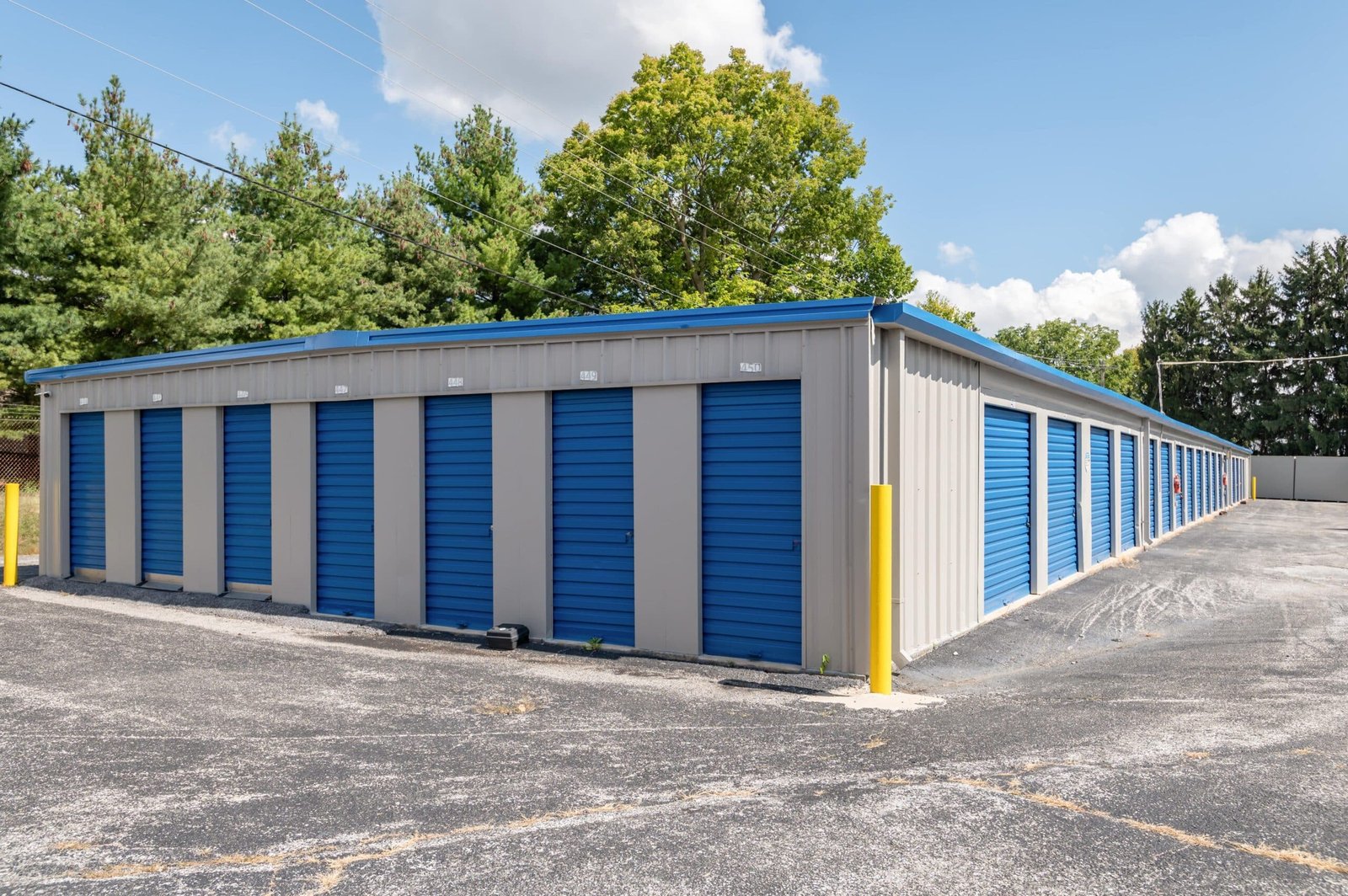
Few buildings ask less of the utilities than self-storage, and that is why it keeps appearing on corners that other uses skip. A storage facility needs power for lights and gates, perhaps water for an office restroom, and not much else. It does not need a deep sewer main, a big fire flow or a large parking field. In western Hidalgo County, where new roads open land before every utility catches up, that simplicity is the appeal.
We build climate-controlled multi-story storage, drive-up unit buildings, mixed facilities with outdoor vehicle and boat parking, and conversions of existing big-box or warehouse space. Owners are developers, regional operators, investors buying into the category and landowners who want to put a parcel to use without a heavy buildout.
The low complexity does not mean low risk. Storage economics depend on cost per rentable square foot, and a few details in site grading, slab design and door hardware decide whether a facility makes money. We give owners a price range early, with a short list of the items that move it.
A typical project has several parts. Single-story drive-up buildings are built on slabs with metal framing, roll-up doors and metal roofs, with unit mixes that range from small lockers to vehicle bays. A climate-controlled building adds insulation, HVAC, interior corridors, elevators if it is multi-story and a loading area. The office, a gate and a kiosk complete the entry.
The site package ties it together: grading, paving, perimeter fencing, access control, lighting, cameras and stormwater. For the structure, we typically use pre-engineered metal buildings, which erect quickly and suit a repeated unit module. Where a developer wants several buildings in phases, we size the first phase's infrastructure for the rest.
A storage slab is only as good as the ground beneath it. The USDA description of the Hidalgo soil series, which has its type location in Hidalgo County, calls it well drained with moderate permeability and moderately alkaline, with secondary lime and weakly cemented calcium carbonate concretions appearing at depths of roughly 12 to 28 inches. In plain terms, shallow soils can be firm and drain well, though local conditions vary by parcel, and a geotechnical report is still the right basis for design.
Drainage matters in the other direction. Hurricane Hanna in July 2020 produced rainfall totals above 11 inches at several gages in the area, including about 11.65 inches near Palmview, so a facility needs a clear path for storm water and a floor elevation that keeps units dry. A flooded unit is a claim and a lost customer, and we regard grading as one of the most important parts of the job.
Owners compare storage projects by cost per rentable square foot, so we look at ways to raise the rentable share. A building with long, efficient corridors and few jogs carries more units per dollar than one with irregular geometry. Door count and door type also matter, since roll-up doors are a large line item and a standard size is cheaper than a custom one.
Next come the slab and the site. A thicker slab or extra reinforcing is worth it for vehicle storage, but may be wasted for light personal storage. We can price alternates with the commercial concrete floors crews we coordinate so the owner sees the trade. Paving is the third piece, and we size it to the traffic: a facility with trucks and trailers needs a heavier section than one serving cars and small vans.
Storage projects reward a contractor who can keep the trades together. We schedule and inspect excavation, forming, reinforcing and slab placement closely on most projects, and we coordinate the metal building erector, the door installer and the electrical contractor so the doors go in the day the walls are ready. Our concrete foundations experience covers the slab edge and footings that metal buildings require.
A tight sequence also protects quality. Slabs are cured and sawcut before framing loads them, door tracks are aligned before the weather arrives and lighting and cameras are installed before the final inspection. These sound like details, but each one affects tenant satisfaction and the facility's insurance profile.
Storage demand follows households and small businesses, and western Hidalgo County has both. Interstate 2 is reported to run through Mission south of the town center, about five miles west of downtown McAllen. A report in 2018 described Palmview as probably the largest suburban area in Texas without a wastewater collection system, with a $42 million wastewater plan underway for up to 1,700 homes, which says a good deal about how fast residential growth ran ahead of infrastructure.
Farther west, the city of La Joya's economic development page states that TxDOT is completing a $206 million relief route to US Expressway 83 north of the city, connecting with Interstate 2 and Interstate 69C and opening thousands of acres for development. New road access like that changes where people live and where owners can profitably place storage. Property management firms that operate storage, and owners planning one, should check our self-storage facility page.
Send us the parcel and your unit mix. We will return a phased plan, a price per rentable foot range and the few items most likely to change it.
Usually only if the office includes restrooms. Many facilities use a small septic system or none, and the rest of the site needs only power, lighting and stormwater. We confirm what the city or county allows for the specific parcel, since requirements vary.
For most drive-up and many climate-controlled projects, yes. Metal buildings are quick to erect, cost-effective for repeated unit modules and easy to expand. Multi-story climate-controlled buildings may use steel or concrete, depending on height and loads.
It shapes the finished floor elevation, the grading and the stormwater plan. We ask early whether the parcel falls within a mapped flood area, because county floodplain orders can require a development permit. Even outside mapped areas, drainage has to be designed carefully.
A drive-up facility with several buildings can often be built in a matter of months once permits are in hand, with the site work and slabs starting first. Climate-controlled buildings take longer because of the mechanical systems. We provide a schedule after reviewing the site and unit mix.
Plan for repeatable buildings, a standard door size, an efficient corridor layout and a site that drains simply. Those choices lower the price per rentable foot more than any single product upgrade.