
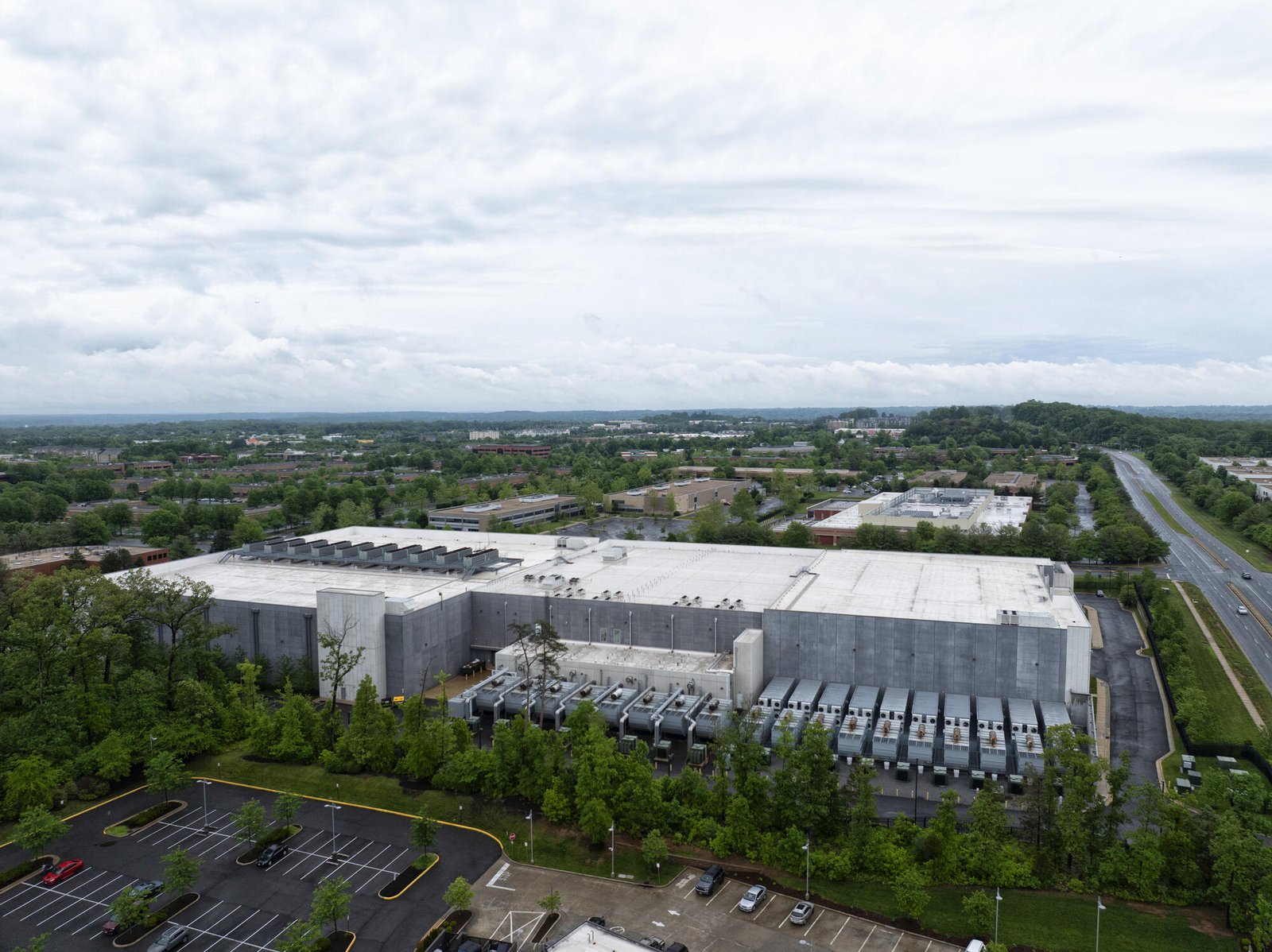
Rain is the first design input for a data hall in the lower Valley. When Hurricane Hanna passed in July 2020, gages near McAllen recorded more than 12 inches, and the drainage district's general manager said the county system was originally agricultural and not built for that kind of event. An operator who puts racks on a site here needs to hear that before the building is sized, not after the first wet season.
Data center work has its own rhythm. The building is a shell around power and cooling, the utility interconnect often takes longer than the construction, and a single missed delivery of switchgear can hold up the whole job. We act as the builder who keeps those moving parts in one schedule. We know how to organize a technical building on a Valley site and what the city and county will ask for.
Below we describe how we approach siting, what a typical scope covers, how the long-lead items are managed and where the cost moves. Related work includes structural steel erection and site development and utilities, both of which a data center needs in quantity.
Texas sets the municipal floor for commercial construction at the 2012 International Building Code under state law, and cities adopt later editions locally. McAllen has moved to the 2024 International Codes and the 2023 National Electrical Code effective January 1, 2026, with plan review, permitting and inspections handled by its Building Permits and Inspections Department. For an operator comparing sites, that clarity helps, and our McAllen work starts there. Outside McAllen, the adopted edition varies, so we confirm with each city before we price.
The city takes applications through an online permit portal and has separate forms for commercial, generator, solar and energy storage work, which matters because a data center may need several of those at once. Backup generators and battery storage are not afterthoughts here; they are permit items with their own review path. We submit them as a package and track them against the building permit, so the inspector does not see the generator for the first time at final.
Drainage and finished floor elevation are the first questions we put to a site. Hidalgo County Drainage District No. 1 manages the master drainage system and links drainage bond programs and a stormwater management program on its site, and for unincorporated land, the county's floodplain order requires a development permit and refers to a flood insurance study. The posted copy of that order is undated, so we confirm the current version and any freeboard requirement directly with the county before design.
A data center cannot tolerate a flooded yard. We look at where water goes when the system backs up, set the pad above the likely high-water line and protect generator pads, fuel storage and electrical rooms with grade and detention. Soils also matter: heavy racks and generators need predictable bearing. If a geotechnical report shows shallow caliche or lime layers, we price drilled piers or over-excavation accordingly. Power is the other siting factor, and the number of industrial parks in the McAllen area gives owners several parcels with existing utility corridors to compare.
A data center scope starts with a hardened shell: concrete or insulated panel walls, a low-slope roof with redundancy for drainage, and floors designed for racks and cooling equipment. Inside, it adds mechanical galleries, electrical rooms, battery spaces, security vestibules and often a small office and operations zone. Outside, it includes generator yards, fuel storage, cooling equipment pads, a secured perimeter and a civil package that keeps stormwater away from critical equipment.
We split the project into shell and core, power and cooling, and commissioning. The first lets the owner dry-in early, the second brings in the specialty subcontractors and the equipment, and the third verifies that the whole system works under load. Owners who intend to install their own racks usually take possession after commissioning of the building systems, not before.
Switchgear, transformers, generators and chillers have the longest lead times in the job. We therefore release equipment submittals before the building is fully designed, track fabrication dates and build the schedule backward from the date power must be available for testing. If a transformer arrives late, the best strategy is to have the structure and pads ready, with everything else complete, so the last item can be set and energized without rework.
We also reserve time for integrated testing. Load banks, failover tests and fire alarm integration take real days, and a schedule that ends on the date of substantial completion without them is not honest. Under a construction manager at risk arrangement, we can buy out long-lead equipment early and give the owner price certainty on those items before final drawings are done.
Data centers pull from several trades at once. Preconstruction estimating is where equipment allowances, power upgrades and civil work are priced against each other. A data center building shell often follows the steps in pre-engineered metal building construction or tilt-wall, depending on the clear height and security requirements. And because a data center lives or dies on its connection to the outside world, utilities and site work tie in at the start.
For corporate and public owners, the question is usually which delivery method to use. We can serve logistics and distribution clients who are adding a technology building to a larger campus, and we explain delivery options during the first meeting.
Tell us your load, site and target date and we will give you a sequence and a price range, with the equipment that sets your critical path called out up front.
We are a general contractor for commercial and industrial buildings. What we offer is the organization to run a technical project: early procurement, power coordination, commissioning and a site that handles Valley rain. Specialized mechanical and electrical systems go to qualified subcontractors, and we show you their qualifications before award.
Treat it as part of the project, not a separate item. Utility studies, easements and equipment orders often take longer than the building. We recommend contacting the utility during site selection, then carrying the interconnect schedule as a line item in the master schedule. The building can be ready before power is, and that is a risk we raise early.
The lower Valley receives heavy rain in tropical events, and the older drainage system was designed for agricultural flow rather than hurricanes. We set the building and equipment pads above the likely high-water level, add detention and overflow paths, and confirm local floodplain rules with the city or county. We do not assume the site drains as the plat suggests.
McAllen publishes separate forms for generator and energy storage work, in addition to commercial building permits. We prepare these together so that plan review sees the whole system. Fuel storage may also trigger fire marshal review. We confirm each with the city before we submit.