
Roughly $1.2 million of federal money went to Hidalgo for water, sewer and a new road before a single building could go up on the land behind them. That grant to Hidalgo, announced in 2018 with a goal of 100 jobs and $20 million in private investment, is a clean illustration of how development works in the western Valley: the infrastructure arrives first, and the buildings follow. A developer who understands that order gets to market faster.
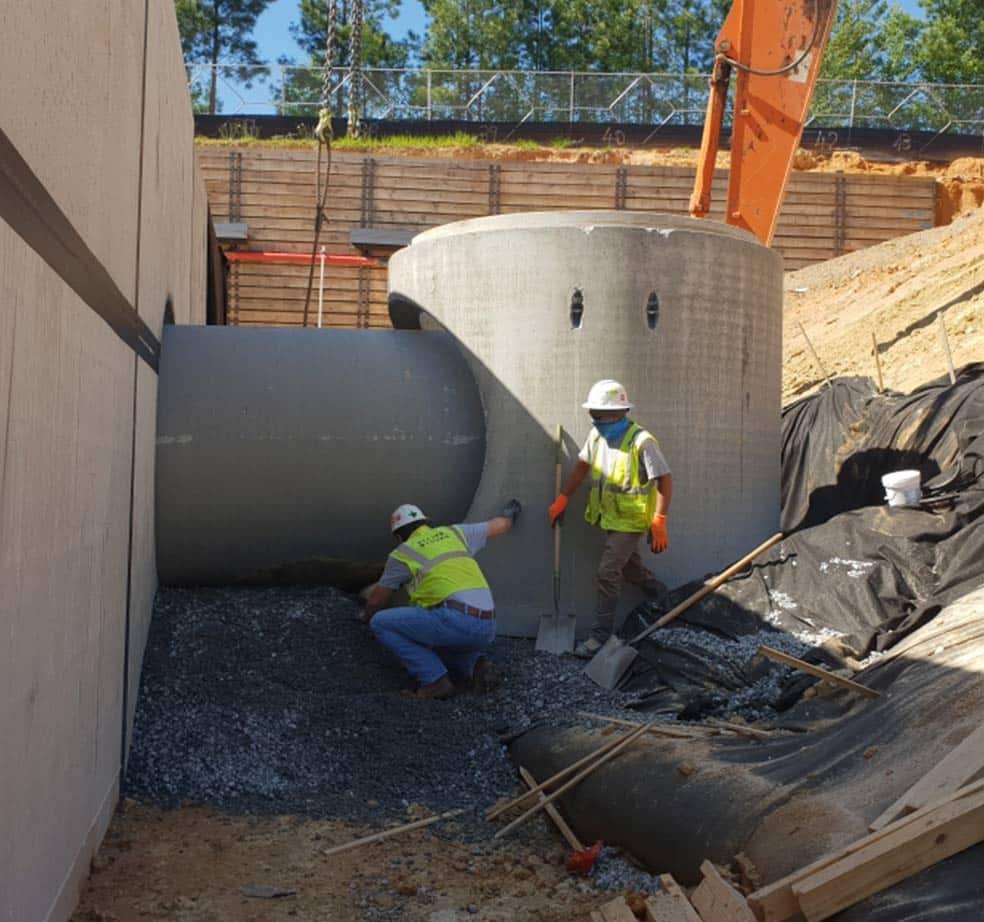
Site development and utilities is the work that turns a field into a pad. It includes clearing, mass grading, detention and drainage, water and sewer lines, storm sewer, electrical and communications conduit, paving and the permits that go with each. In the Valley, it is often the largest single risk in a project, because of flat terrain with limited fall, heavy rain events and utility service that varies from city to city.
We schedule, coordinate and inspect most of this work closely. The sections below explain our capabilities, the conditions we plan for, the permits we manage and the schedule logic. Companion topics include stormwater and drainage and mass grading.
We handle clearing, excavation, fill placement and compaction, trenching, pipe installation, manholes, inlets, curb and gutter, paving subgrade and concrete flatwork through the trade partners we schedule and inspect. Close trade coordination keeps the schedule in our control, which matters most in the first weeks, when every other trade is waiting for the pad.
That control also helps quality. We can test compaction as we go, adjust moisture on the fill, keep a daily record of density results and correct problems before they are buried. Pipe is bedded and tested before backfill, and lines are surveyed for grade. For specialized work, such as lift stations or boring under roads, we bring in qualified subcontractors and manage them directly.
Drainage is the central issue. The county's drainage system was originally built for agriculture, and its district manager has said as much in public, so a new commercial site must manage its own runoff with detention and controlled release. Hidalgo County Drainage District No. 1 manages the master system and is advancing bond-funded improvements, including a proposed $14.5 million South Lateral Drain Phase VII flood mitigation project. We design site drainage to the district's requirements and plan outfalls early.
Flood protection is also regional. The International Boundary and Water Commission awarded a $6.4 million contract in 2022 to fix a gap in the Rio Grande levee near Peñitas, which an IBWC manager said would protect Peñitas and Mission. Such projects change risk maps over time, so we check the current map and the latest requirements. Soils, with lime layers at 12 to 28 inches in the Hidalgo series, need testing before earthwork quantities are fixed.
A typical package begins with a survey and erosion control, then clearing and stripping, then mass grading to the design pad. Next come utilities: water mains and services, sanitary sewer, storm drains, detention basin, electrical and communications conduit, and fire lines. Finally, paving: subgrade, base, concrete or asphalt, curbs, striping and signs.
Many sites also require off-site work. A road extension, a turn lane, a utility extension or a pump station can be as large as the building. We identify these early and price them separately. Parking lots and truck courts, described under truck courts and dock aprons, are part of the same package. In growing western areas, the relief route north of La Joya, a 6.7 mile controlled-access highway, is expected to open new land, and future sites there will need the same sequence.
Palmview shows how much utility availability matters. In 2018 the city manager described it as probably the largest suburban area in Texas without a wastewater collection system, and a $42 million wastewater plan overseen by the water district was underway with up to 1,700 homes able to connect. A site that cannot connect to sewer needs another solution, such as a package plant or a septic system, which changes cost and approvals. We find out what serves a lot before design starts.
Permits come from several bodies: the city or county for grading and development, the drainage district for outfalls and the utility provider for service. Hidalgo County's floodplain order requires a development permit with a fee for special flood hazard areas in unincorporated land, and the city of McAllen takes applications through its online portal. We keep a permit matrix and track each submittal.
Open trenches and heavy equipment are the main hazards. We shore or slope trenches to standard, mark and protect utilities before digging, and control dust and mud at the entrance. Traffic control plans protect public roads when we tie into mains or build turn lanes.
Neighbors matter as well. Dust, noise and truck routes affect homes and businesses nearby, and we plan work hours and haul routes to reduce complaints. Rain events create special risks, including washouts and flooded excavations, so we maintain erosion controls and a plan for storm days.
The schedule is driven by permits, weather and utility approvals. We submit grading and utility plans early, because review times vary. We pour no foundations until the pad is certified and the utilities are tested. In wet weather, we plan for downtime and stage work so that critical items such as underground piping are done in the drier months where possible.
The result is a pad that is ready when the building contractor needs it. When we also build the structure, as with warehouse construction, the handoff is seamless. Developers in commercial real estate often hire us for site work alone and add the building later.
Send us a parcel and a use. We will return a utility and drainage review, a sequence and a price range.
It depends on soil, drainage and utilities, but plan for several months from permit to certified pad. The permit and utility coordination often take longer than the earthwork. We give a schedule with those items shown.
Options include extending a main, building a lift station, using a package plant or installing septic if the use and soil allow. Each has cost and approval differences. We investigate before you buy land if possible.
The drainage district, the city or the county, depending on location. Your engineer prepares the plan, and we coordinate review and construction. Early contact avoids delays.
Yes. Many owners hire us for the pad and utilities, then build with us or someone else. We certify the pad and deliver test records to the next contractor.
Heavy rain stops grading and can flood trenches. We schedule critical earthwork in drier periods when possible, protect exposed areas and keep float for storm days.