
Switchgear does not care about your opening date. A transformer, an elevator, a rooftop unit with unusual capacity or a set of storefront systems can have a manufacturing and shipping lead time that is longer than the whole concrete and framing sequence, and when one of them arrives late the building sits finished but not usable. Owners sometimes spend months perfecting a layout and only then discover that the gear needed to energize it would arrive well after the doors were meant to open.
Long-lead procurement is the discipline of finding those items early, ordering them early and protecting the order against price and schedule changes. For commercial owners in McAllen and the central Valley, it is also a financial question: when to commit a deposit, who holds title to stored material and what happens if the project stalls. We manage that process alongside design, and we write it into the schedule so nothing is a surprise.
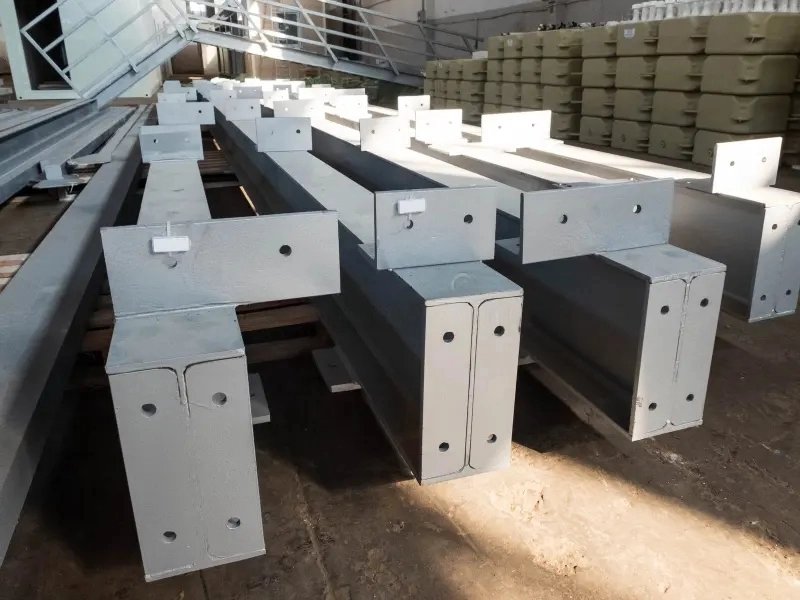
The list changes by building, but it usually includes electrical switchgear and transformers, generators, large rooftop and split mechanical equipment, elevators and escalators, fire pumps, structural steel and specialty glazing, custom storefronts, and refrigeration for cold storage or restaurants. Medical projects add imaging equipment, nurse call and medical gas systems. Industrial projects add overhead cranes, dock levelers and process equipment.
Utility service belongs on the list too. The electric utility's transformer and meter schedule can be the true critical path, particularly for large industrial users, and we ask for the utility's requirements before the site plan is final. Hospital and clinic renovations in the McAllen medical district give a sense of the timing: the state's records list a $7 million neuroscience ICU renovation of 11,108 square feet with construction running from October 2024 to August 2025, and a VA MRI addition and renovation of about 3,300 square feet total scheduled from September 2025 into November 2026. Equipment and systems of that kind are usually bought long before the first wall is opened.
We start with a procurement log in preconstruction. Every item with a lead time over a set threshold is listed with its supplier quote, release date, deposit terms and the date it must be on site. Our preconstruction estimating team reviews each entry against the design status, because an early order for equipment whose specifications are still moving can be worse than a late one.
Where it makes sense, we recommend early release packages. The owner signs a limited authorization, the supplier issues a submittal and the item goes into the production queue while permits are still in review. The risk is real and we explain it plainly: if the design changes or the project is cancelled, a deposit may be lost. For many owners, that risk is smaller than the cost of waiting. For others, we propose phased alternatives, such as temporary power or a rental unit, that keep the opening date intact.
Submittals are the other half of procurement. A shop drawing that sits on a reviewer's desk for two weeks is two weeks of lead time lost, so we agree on review durations with the architect and engineer at the start, track every submittal on a log and chase the slow ones. Approved submittals are checked against the contract documents before release, because a wrong voltage or a mismatched dimension caught at the factory costs far less than the same error found on the loading dock.
Equipment prices move, and quotes have expiry dates. We lock pricing as soon as the owner approves an item, record the validity period and track escalation clauses so that nothing slips by unnoticed. When a quote lapses before an order is placed, we tell the owner in writing, along with the likely effect.
Storage and insurance are real costs. If gear arrives before the building can take it, someone must store it, insure it and protect it from heat and humidity. We negotiate delivery windows with suppliers and use a bonded warehouse when needed. Freight also adds up on heavy equipment, and for sites near the border crossings it helps to understand timing around the area's freight volume, discussed in our write-up on truck courts and dock aprons.
Industrial plants lead the list. A reported 98,000 square foot automated metal-recycling plant planned in south Mission, with a $50 million budget, would depend on process equipment and heavy electrical service as much as on its shell. Cold storage and food buildings depend on refrigeration packages. Manufacturing plants and cold storage buildings routinely have the longest equipment lists.
Healthcare projects rank next, then hotels and multifamily buildings, which depend on elevators, mechanical systems and large quantities of repeated fixtures. For healthcare owners we coordinate with equipment vendors and the design team, in line with the way healthcare systems typically phase capital projects.
Every long-lead item is entered in the master schedule with three dates: when design must be final, when the order must be placed and when the item must be on site. We track those dates weekly. If any slips, we show which downstream tasks move and by how much, and suggest recovery options such as resequencing trades, expediting with the supplier or substituting a comparable product.
We also build realistic delivery logistics. Large equipment needs crane time, access roads and storage space, and delivery windows must be coordinated with other trades. Once equipment is set, start-up and testing follow, which links to our work on commissioning and closeout. For retailers opening in several locations, we reuse procurement lessons across multi-site programs.
Send us the drawings or the equipment list. We will return a log of long-lead items with dates, risks and the orders we would release first.
As soon as the design is firm enough to write a specification and the owner is ready to accept the risk of a deposit. Switchgear and generators are often the first. We help you decide with a procurement log that shows lead times against your opening date.
Terms vary by supplier. We negotiate delivery windows and hold dates up front, and we try to avoid large non-refundable payments until the project is secure. If a delay hits, we look at storage, rescheduling and alternate uses of the equipment.
It depends on the contract and the payment terms. We spell out title, storage location and insurance in writing before a deposit is paid, so there is no argument if something goes wrong.
We find out early by asking for production status, not just a promised date. If a slip looks likely, we price alternates, resequence interior work around the missing item and, where the contract allows, escalate with the supplier. The owner gets the facts and options in writing the same week.
Sometimes. Temporary power, rental chillers and portable units can bridge the gap. They cost money and require permits, so we price them against the cost of delay.