
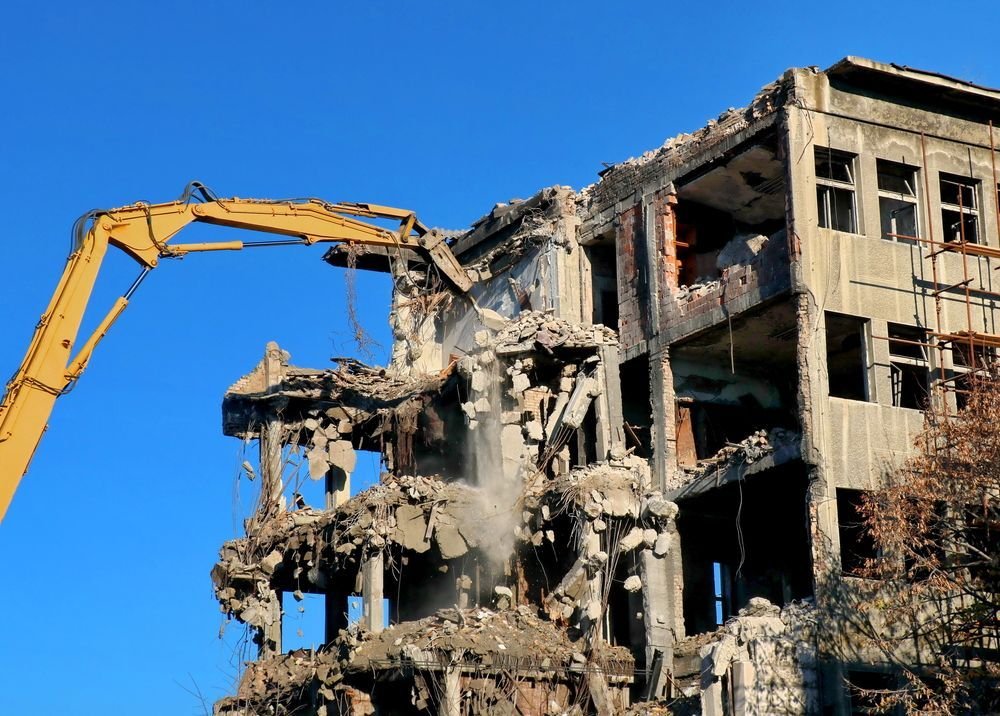
Before an excavator touches a wall, three things should already be settled: what is inside the building, what is connected to it and who has to approve its removal. The City of McAllen keeps a separate permit form for demolition alongside its commercial, sign, solar and pool forms, which tells you that tearing a building down is treated as its own regulated act. Skipping that discipline is how owners end up with a stop-work order, a damaged neighbor or an unexpected bill from a utility.
We handle demolition for owners clearing a site for new construction, gutting a building for renovation or removing a structure that has outlived its use. The scope runs from interior selective demolition inside an occupied center to the complete removal of a building, slab and footings. Whatever the size, the aim is the same: take out exactly what is supposed to go, protect everything that is supposed to stay and leave the site ready for the next trade.
Selective demolition removes finishes, partitions, ceilings, mechanical and electrical systems and sometimes portions of structure while the rest of the building remains. It requires careful sequencing, temporary shoring where needed and protection of adjacent tenants. Structural demolition takes down walls, roofs and frames, using excavators with shears, hydraulic breakers and cranes depending on the material. Site demolition clears slabs, foundations, pavement, curbs and underground utilities.
Before any of that, we do surveys. Utility disconnections are confirmed in writing, hazardous materials are identified and abated by licensed contractors, and the plan for debris sorting and hauling is set. Concrete and masonry can often be crushed and reused on site as base material, which cuts hauling and import costs. When demolition leads directly into renovation or reuse, we plan the two scopes as one.
Demolition is the most hazardous stage of construction, and we treat it that way. Our plans cover exclusion zones, dust suppression with water, controlled collapse sequences, protection of overhead and underground utilities, spotters for equipment and fall protection at open edges. Workers are trained on the specific hazards of the building, and the plan is reviewed before work begins.
Neighbors matter. In a commercial corridor, a dust cloud can drive away customers from the shops next door. We schedule noisy work for approved hours, keep sidewalks and driveways clean and post contact information so complaints reach us directly. At sites near retail in McAllen's trade area, we also protect parking, accessible routes and signage for neighboring tenants. Related precautions during construction in a working building are described in phased construction on occupied sites.
McAllen's Building Permits and Inspections page lists a separate demolition form, and applications are taken through the city's online portal. Before permits are issued, utility companies must confirm disconnection of electric, gas, water and sewer service. Older buildings may need an asbestos survey before demolition or renovation, which state and federal rules require for many commercial structures, and abatement must be done before demolition by licensed professionals.
Environmental controls also apply. Disturbing more than an acre brings stormwater pollution prevention requirements, and a smaller site still needs erosion control and a clean construction entrance. Owners should also expect the building official to ask about the planned reuse of the site, since a cleared lot left open can draw drainage and appearance complaints. The permit path for every project begins in permitting and entitlements, where we lay out which agencies are involved and in what order.
Open demolition sites collect rain. Hurricane Hanna dropped about 12 inches at a gage north of McAllen in July 2020, and a cleared site with exposed slab edges and open excavations can hold water for days when downstream drainage is slow. We protect open utility trenches, keep pumps on hand and grade the cleared area so it drains. Our approach to drainage on cleared sites is described under stormwater and drainage.
Utilities are a second hidden issue. Abandoned lines, septic tanks, irrigation systems and old fuel tanks are frequent surprises. In Palmview, a $42 million wastewater plan was reported underway in 2018 because the area had no wastewater collection system, and some older properties there may still have private systems that must be located and properly closed. Wherever a site once had a private septic tank or well, we locate it, pump it and fill it according to the rules before the new foundation is poured.
The schedule for demolition depends on abatement, utility disconnects and permit timing. We line these up so the demolition crew is not waiting on a disconnect for a week. On a typical commercial building, the active tear-down is short compared with the preparation and the cleanup. Debris hauling, crushing and grading take the remainder.
The handoff matters most. Tear-out crews, hauling contractors and the dump facility all have their own calendars, so we book trucks and disposal in advance and keep a backup route if one is closed. A site cleared on Friday and graded on Monday is ready for mass grading and new foundations without delay. A site that is cleared and left to weather needs additional work. We coordinate with the next contractor and, whenever possible, perform both scopes. Commercial developers deciding on a teardown can see how this fits the work we do for commercial real estate developers.
We take demolition in McAllen and the surrounding trade area, including aging retail centers, former warehouses and small buildings in the older parts of McAllen. Send us the address and the planned reuse, and we will return a demolition plan and price range, including abatement allowances and the items most likely to change the number.
Send the address, the building age and what comes next. We will return a demolition plan, an abatement allowance and a range with the items that decide it.
Yes. McAllen has a separate demolition form and takes applications through its online portal. Utility disconnect confirmations and, for older buildings, an asbestos survey are normally required first.
The active tear-down of a typical commercial building is often a matter of days to a few weeks, but abatement, disconnects and permits come first. We provide a schedule once we have seen the building.
Often. Crushed concrete and masonry can serve as base material or fill if the specification and the engineer allow it. That reduces trucking and import costs.
Older buildings can contain both. Surveys identify them, and licensed contractors remove them before demolition. We coordinate and keep the records.
We take steps to limit it: dust control, protected sidewalks and driveways, set working hours and a direct contact number. Adjacent tenants get notice before noisy work.