
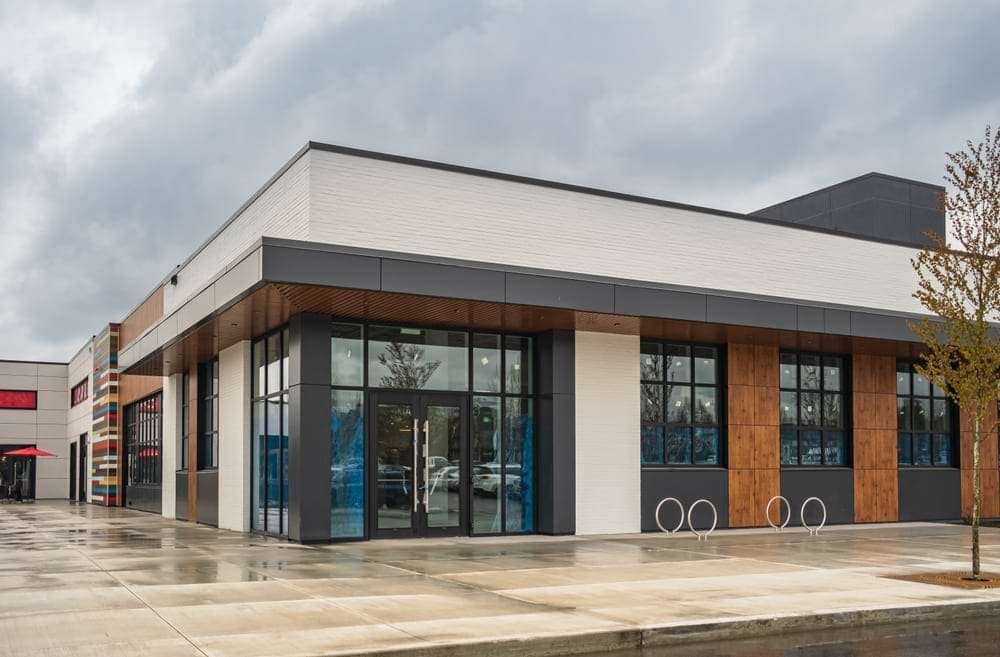
Opening day depends on paperwork as much as on paint. A building can be finished, cleaned and stocked and still be unable to welcome a customer because a certificate is missing, a system has not been tested or the state has not accepted its accessibility inspection. The City of Hidalgo's permit checklist says plainly that a Certificate of Occupancy is required before occupancy, and the same is true across the Valley. Closeout is where a good project becomes a usable one.
Commissioning and closeout cover the last stretch of a job: testing and balancing, systems start-up, final inspections, punch lists, operations manuals, warranties, as-built drawings, training and the handoff to the people who will run the building. We plan it from the first schedule, because the owners who struggle at the end are almost always the ones who treated it as an afterthought. For a tenant waiting on a lease commencement date, the days between substantial completion and actual occupancy are the most expensive of the project.
A typical commercial building needs final approval from the building department, the fire marshal, the health department for food service, the utility for service connections and, for projects registered with the Texas Department of Licensing and Regulation, a final accessibility inspection. Projects costing $50,000 or more must be registered and reviewed, and the state expects the completed work to match the reviewed plans. Inspectors have little patience for a ramp slope that was changed in the field.
Windstorm certification adds a step in some counties. The Texas Department of Insurance requires Windstorm Certificates of Compliance filed after April 1, 2026 to be certified under the 2024 International Residential Code or the 2024 International Building Code, so the structural inspections and documentation on a covered project have to match that edition. In McAllen the 2024 codes took effect in January 2026, which lines up the city's review with the certificate. We make a checklist of every required sign-off at the start and keep it current.
Commissioning starts with the mechanical, electrical and plumbing systems. Testing and balancing confirm that air flows and water flows match design. Controls are checked end to end, sequences verified, alarms tested and emergency power run under load. Fire alarm and sprinkler systems are tested with the fire marshal. Elevators are inspected and certified. Low-voltage systems such as security, access control and data are tested and documented.
Then comes the punch list. We walk the building with the owner and architect, record items by room and trade, and track them to completion. The final cleaning, touch-up and re-inspection come after. Closeout documents include operation and maintenance manuals, warranties, attic stock, keys, as-built drawings and a log of training sessions. Our work on tenant improvements follows a shorter version of the same process.
One item owners tend to overlook is the transition of utilities and accounts. Electric, water, internet and waste service need to be in the right name before the first day of occupancy, and meters sometimes take longer to set than anyone expects. We ask for the owner's utility contacts during preconstruction and confirm each service date in writing as the project nears completion, so that lights, cooling and internet are on when the tenant arrives with inventory.
The best closeouts start at preconstruction. We write a commissioning plan into the schedule with durations for testing, balancing and inspections, and we confirm what the owner expects at turnover. Our permitting work builds the approvals list that closeout must satisfy.
During construction, we track submittals and test reports as the work is installed, not at the end. A pressure test on a water line done before the walls close is worth far more than an argument about it afterward. We assemble the closeout binder in pieces as the job proceeds, so that completion is a matter of assembling what already exists. We also schedule owner training for facility staff while the contractors who know the systems are still on site, and record it so that new employees can refer back later.
The common failures are predictable. Systems that are not ready for testing when the inspector arrives; inspections requested before the work is complete; documents that no one collected; punch lists that grow because items were never recorded earlier; and utility connections that were not scheduled in time. A Palmview retail project of about 9,542 square feet and $1.3 million, with construction recorded from April to July 2025, is the kind of compact job where a slipped inspection can consume a large share of the schedule.
We prevent these problems with early scheduling and daily logs. Inspections are requested only when we have walked the work ourselves. Utility service dates are confirmed before the final week. When we see a risk, we tell the owner, because an honest early warning gives them time to adjust lease dates, staffing and opening events. Related coordination with phased occupied-site work is more complex because the building is already in use.
Retail tenants expect a clean, stocked-ready shell with all certificates in hand. Medical clinics need equipment connections, infection control sign-off and sometimes state licensing visits. Industrial owners focus on utilities, fire protection and dock equipment. Owners of medical offices and retail centers commonly ask for a warranty walk about eleven months after occupancy, and we schedule it. Public agencies, including those in the government and public sector, add formal closeout requirements for records and final payment.
Share your target opening date and the approvals you know about. We will return a closeout plan with durations, inspections and the documents you will receive.
Substantial completion is the point where the owner can use the work for its intended purpose, as defined by the contract. A certificate of occupancy is the building official's approval to occupy. They are related, but one does not guarantee the other, which is why we coordinate them together.
It depends on building size and complexity. Testing, final inspections and the punch list usually run a few weeks on a small commercial project, longer for a larger building. We put the specific durations on the schedule at the start.
Operation and maintenance manuals, warranties, as-built drawings, test and balance reports, inspection certificates, attic stock, keys and training records. We organize them in a digital and a paper set if you prefer.
Your architect registers the project with the state when it applies. We schedule the inspection, make sure the work matches the reviewed plans and correct any items before sign-off.
Usually at substantial completion, though the contract controls. We keep a register of warranty start and end dates and schedule a follow-up walk before the first year ends.